A one-time pest spray treats the ants you can see. It does nothing about the conditions that attracted them, which is why the same corner of the house tends to have a pest problem every single year. Real prevention means changing what the wood offers them, not just clearing out this season's colony.
The Usual Suspects
- Carpenter ants are the most common offender. They don't eat wood the way termites do, they excavate galleries inside it, and they strongly prefer wood that's already soft or slightly rotting.
- Powder post beetles bore small, round exit holes and leave behind fine, powdery sawdust called frass. Fresh frass under a hole means an active infestation, not an old one.
- Termites are rare across most of the region we serve, but active in pockets of southern Ontario. Worth ruling out if you're in that area and seeing damage that doesn't match ant or beetle patterns.
Why They Target Log Homes Specifically
All three pests are drawn to the same features log construction has in abundance: exposed end grain, ground-contact points, and any wood that's already been softened by moisture or early rot. A log home in good repair with an intact finish is a much harder target than one with a few soft spots and unsealed cracks. Pests aren't unlucky. They're opportunistic, and they're finding an opening you probably don't know is there.
The Real Fix Is Prevention, Not Reaction
The most effective long-term deterrent is a borate-based wood preservative, applied as part of your regular stain system rather than as an emergency treatment after you've already found damage. Borate is absorbed into the wood fiber and makes it toxic to wood-boring insects on contact. It doesn't harm the wood, the finish, or you or your pets. Applied annually alongside your regular maintenance coat, it's a standing deterrent rather than a one-time fix.
Signs You Already Have an Active Problem
- Fine sawdust (frass) collecting beneath small round holes
- A faint rustling or ticking sound inside a wall, especially at night
- Discarded wings near windowsills in spring, a sign of a swarming event
- Holes reappearing in the exact same spot year after year
The Cycle That Keeps Homeowners Calling Us Back
This is the part most people don't realize: carpenter ants and beetles often return to the same holes annually and tunnel a little deeper each season. A surface spray might knock back the visible activity, but if the gallery isn't filled and the wood isn't treated, the colony (or a new one) comes right back to the same weak point next year. Breaking that cycle requires treating the tunnel itself, not just the entrance.
What We Actually Do
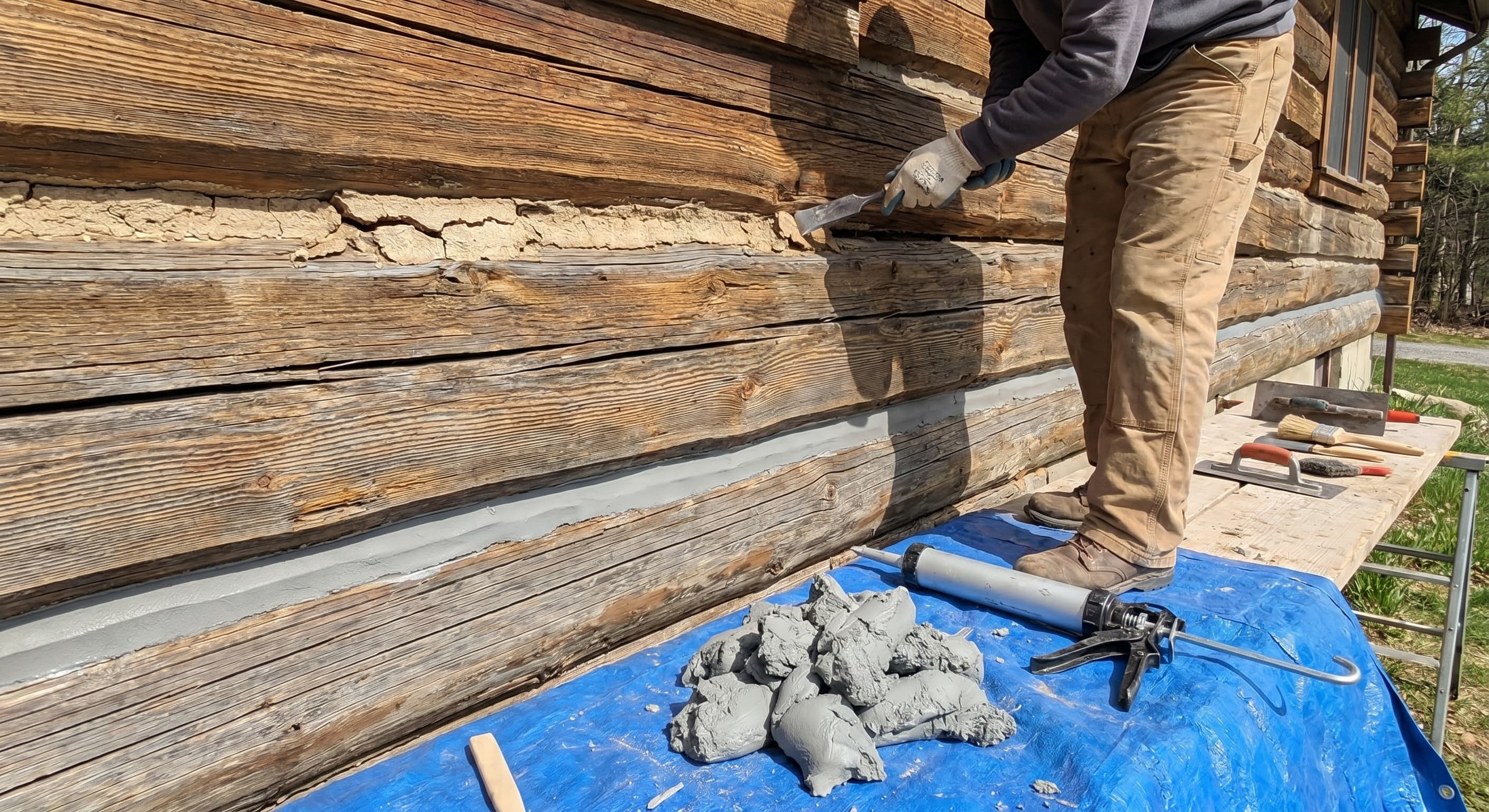
Every existing hole gets filled, borate is applied directly into the tunnel before it's plugged, and the plug is surface-matched so it doesn't stand out. From there, an annual borate-based stain system keeps the wood inhospitable to new activity going forward. It's the same principle as re-staining for UV protection: a small, regular maintenance step that prevents an expensive one.
If you're hearing something in the walls or finding sawdust where you shouldn't be, don't wait for it to get louder. Book a house call. Log Doctor serves Saskatchewan, Manitoba, and Ontario.